The Quality Life Jungle of Human Individual Differences
Well-Being Across Our Individual and Cultural Differences begins by understanding the gene-environment lens through which we see the world…and each other
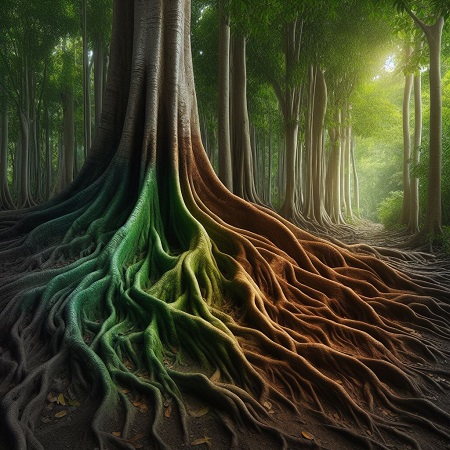
Over the course of human evolution, heritable variation in cognition, emotion and behavior produced a gene-environment paradox: the paradox of the right and the good. What is considered right or good varies across individuals and groups, fundamentally shaped by the complex interplay of genetic propensities and environmental conditions (e.g., social, political, economic, technological, natural and biophysical).4
Through this interplay, people actively evoke, create, modify and select into environments5 that more closely align with their genetic propensities,6 forming groups and coalitions that often serve as vehicles for hierarchy and social dominance7,8 in a competition to influence and control how norms and institutions regulate the distribution of resources and power.9
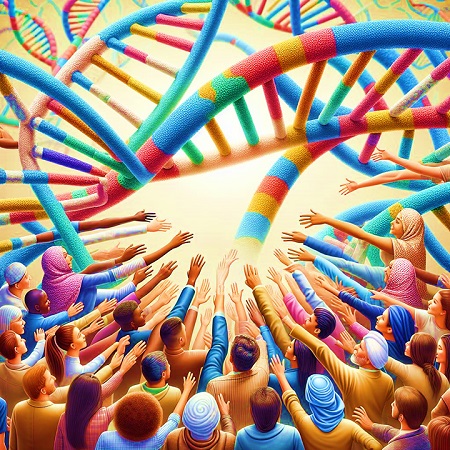
This article introduces four fundamental drivers underlying the gene-environment complexities of our social hierarchies.
These complexities are deep-rooted in the clash of right and good, a fundamental problem of social cooperation and well-being.1 ‘Right’ typically means legally or morally correct where ‘Good’ typically means something valuable, beneficial or desirable.2
The Gene-Environment Paradox Human differences in cognition, behavior, moral judgments and social preferences emerge from the interplay between genetic propensities and environmental conditions.3 The result is a paradox–the paradox of the right and the good–what is considered “right” or “good” varies due to the gene-environment complexities of the interplay.4
When the first cities and states began to appear 5000+ years ago, top-down social hierarchy and socioeconomic inequality came too.1,2,3
A growing body of research shows the ‘predatory’ stresses of social hierarchy and socioeconomic inequality can become biologically embedded within a person’s lifespan contributing to a cycle of disadvantage where systemic harms can persist and be reinforced across generations.4

Jeffrey Sachs, in the introduction to the inaugural World Happiness Report in 2012, made this compelling statement: “The realities of poverty, anxiety, environmental degradation, and unhappiness in the midst of great plenty should not be regarded as mere curiosities. They require our urgent attention, and especially so at this juncture in human history.” He continued by pointing out how affluent populations are “so separated from those they are imperiling that there is little recognition, practical or moral, of the adverse spillovers (or ‘externalities’) from their own behavior.”4

What does it mean to be Prosocial?
Is there anything more dangerous to the future of our genome and the planet than our ability to make harms look like social and moral goods?
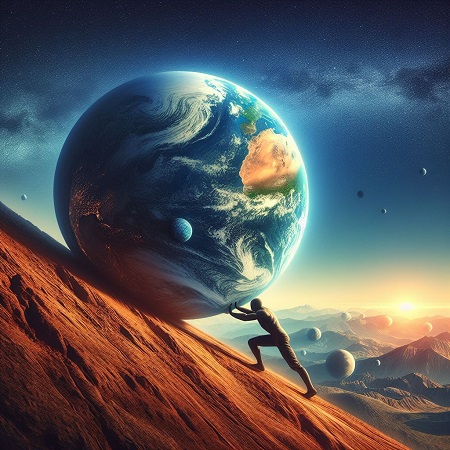
The hard problem of human individual differences sits like a sphinx guarding the gateway to equality and well-being with a prosocial riddle, a gateway through which each of us must pass…
What We Stand For
Well-Being Across Our Individual & Cultural Differences
Stop the Intergenerational Transmission of Social Hierarchy and Socioeconomic Inequality…
We Support the Following:

Policies Focusing on Quality Life Years Gained…
Universal Health Care
Wage Subsidies
Minimum Basic Income
Rent and Price Control Policies
Supply Chain Transparency in Food & Over the Counter Drugs
The Paris Accord
UN Sustainable Development Goals
Smart Machine Technologies (AI) as a Global Public Good
Public Banking Concepts…as described by Angus Deaton
Global Wealth Tax
Public Ownership of Natural Resources
Anti-Death Penalty
Public Ownership of Energy Supply
A Global Consortium to Establish Policies Regarding Private and Public Rights
Regulation of Ownership and use of Space and Planetary Bodies
All for-profit corporations should develop social enterprise projects designed to reduce the political and economic effects of hierarchy– socio-economic inequality and inequities in health, happiness and longevity.
In addition, we endorse an editorial in Nature March 2022 on climate change.
“Although there’s now a consensus that human activities have irreversible environmental effects, researchers disagree on the solutions — especially if that involves curbing economic growth. That disagreement is impeding action. It’s time for researchers to end their debate. The world needs them to focus on the greater goals of stopping catastrophic environmental destruction and improving well-being.” The editorial concludes “…the world is running out of time.”
All articles and related material appearing throughout this website were developed and written by Gregg Walborn.
QualityLifeJungle.net is not a 501(c)(3) entity.
Website design and editing by Sally Walborn
Attributions:
Map photo courtesy of Hans Isaacson on Unsplash.com
DNA photo courtesy of Warren Umoh on Unsplash.com
Pencils photo courtesy of Kelli Tungay on Unsplash.com
Diverse Group photo courtesy of Fauxels on Unsplash.com
Original paintings copyrighted by Bonheur, LLC
Other images shown in the header, with the articles and elsewhere on this website are copyrighted by Bonheur, LLC.