The Quality Life Jungle of Human Individual Differences
Well-Being Across Our Individual and Cultural Differences begins by understanding the biological lens through which we see the world…and each other
FOUNDATIONAL ARTICLES: Core concepts and articles explaining the global problem of predatory well-being. See our Foundational & other articles.
MORE ARTICLES: How these concepts apply to real-world situations. See The World Happiness Report 2026: The Arithmetic of Global Inequality.
Foundational Articles
The Gene-Environment Roots of Social Hierarchy and Socioeconomic Inequality
Four Fundamental Drivers of Social & Moral Conflicts Over Resources, Inequality and Well-Being
The Paradox of the Right and the Good: A Gene-Environment Paradox
Genes, Environments and Socioeconomic Inequality
More Articles
Welcome to the Jungle!
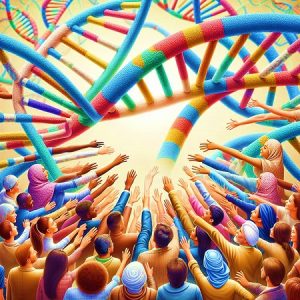
The human motivations and capacities underlying every art, science and innovation whether aimed at satisfying a need or seeking something good emerge from the complex interplay of genetic propensities and environmental conditions (e.g. social, political, economic, natural and biophysical).1
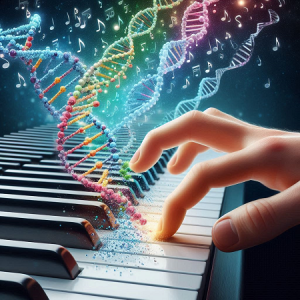
Like fingers ac
ross a piano’s keyboard creating a melody, this interplay produces life course trajectories with many variations and outcomes. In a similar way, individual experiences and traits emerge from the unique interplay of genetic propensities and environmental factors while on a broader scale, countries and cultures can have distinct but intertwined themes, harmonies and melodies created by the collective and dynamic gene-environment experiences of their populations.
Now…here we are in the 21st century…our gene-environment themes, harmonies and melodies still in discord.
Who are we and what have we done?
See our foundational article The Gene-Environment Roots of Social Hierarchy and Socioeconomic Inequality.
The gene-environment framework of every culture and country in the world is littered with the self-perpetuating inequalities of social hierarchy and socioeconomic stratification reproduced through multiple pathways that include the biological embedding of social experience.
The articles currently on this website drill down deep into the gene-environment basis of this pattern, laying the foundation for a series of new articles showing how increasingly complex global conflicts are accelerating this biologically embedded pattern into a crisis that threatens the well-being of future generations and the planet’s life-support systems.
Below is a short list of major social, economic, environmental and geopolitical problems that will be discussed in future articles.
In each of these flashpoints, a gene-environment paradox, system-justified harms, default genetic determinism, advancing AI technologies and the internet are playing a critical role, accelerating changes in social, political and economic structures across the world.304
–the unbridled concentration of income, wealth and technological power on a global basis
–cultural, racial and ethnocentric hostilities fueled by socioeconomic inequality
–the global impact of increasingly complex climate change inequities on low-income populations
–global conflicts over habitable and agricultural land
–global food production and distribution inequities
–global health, education and longevity disparities
–the internet’s role in weaponizing data, fueling disinformation warfare and amplifying ethnic, racial, religious and cultural tribalism
–social conflicts over AI’s role in governance, education and resource distribution
–Biotech Elites capturing political systems and economic resources
–political instabilities resulting in the global rise of authoritarian regimes
–political and economic conflicts between nuclear nations
Is there anything more dangerous to the future of our genome and the planet than our ability to make harms look like social and moral goods?
Something must be done…
The Global Pursuit of Well-Being Across Our Individual & Cultural Differences
Read our NEW Article:
References
1. von Stumm, S., & d’Apice, K. (2022). From genome-wide to environment-wide: Capturing the environome. Perspectives on Psychological Science, 17(1), 30-40.
Allegrini, A. G., Karhunen, V., Coleman, J. R., Selzam, S., Rimfeld, K., von Stumm, S., Pingault, JB, Plomin, R. (2020). Multivariable GE interplay in the prediction of educational achievement. PLoS Genetics, 16(11), e1009153.
Sauce, Bruno, and Louis D. Matzel. “The paradox of intelligence: Heritability and malleability coexist in hidden gene-environment interplay.” Psychological bulletin 144.1 (2018): 26.
Thayer, Z. M., & Kuzawa, C. W. (2011). Biological memories of past environments: Epigenetic pathways to health disparities. Epigenetics, 6(7), 798–803.
Bronfenbrenner, U., & Ceci, S. J. (1994). Nature-nuture reconceptualized in developmental perspective: A bioecological model. Psychological review, 101(4), 568.
Turkheimer, E. (2000). Three laws of behavioral genetics and what they mean. Current directions in psychological science, 9(5), 160-164.
Erola, J., et al. (2022). Socioeconomic Background and Gene–Environment Interplay in Social Stratification across the Early Life Course. European Sociological Review 1 (2021): 17.
Avinun, R. (2020). The E is in the G: gene–environment–trait correlations and findings from Genome-Wide Association Studies. Perspectives on Psychological Science, 15(1), 81–89.
Plomin, R., Gidziela, A., Malanchini, M., & von Stumm, S. (2022). Gene–environment interaction using polygenic scores: Do polygenic scores for psychopathology moderate predictions from environmental risk to behavior problems? Development and Psychopathology, 1-11.
“GxE is important because it recognizes that one size does not fit all and offers the possibility of personalized tailoring of children’s environments based on their genetic propensities. Moreover, weak environmental effects in the population could have strong effects on children with particular genetic proclivities. GxE is the genetic extension of phenotypic research on differential reactivity to the environment.”
“GxE is distinct conceptually from gene-environment correlation, which denotes experiences that are correlated with genetic propensities, that is, genetic exposure to environmental effects and genetic mediation of associations between environmental factors and psychopathology.”
Polderman, Tinca JC, et al. “Meta-analysis of the heritability of human traits based on fifty years of twin studies.” Nature genetics 47.7 (2015): 702-709.
Belsky, J. (2024). The nature of nurture: Darwinian and mendelian perspectives. Development and Psychopathology (2024): 1-10.
Wedow, R., et al. (2018). Education, smoking, and cohort change: Forwarding a multidimensional theory of the environmental moderation of genetic effects. American Sociological Review, 83(4), 802-832.
Scorza, P., et al. (2019). Intergenerational transmission of disadvantage: Epigenetics and parents’ childhoods as the first exposure. Current Opinion in Psychology, 28, 120–125.
Bartels, M., et al. (2022). Exploring the biological basis for happiness.
Kong, A., et al. (2018). The nature of nurture: Effects of parental genotypes. Science, 359(6374), 424-428.
Tucker-Drob, E. M., & Bates, T. C. (2016). Large cross-national differences in gene × socioeconomic status interaction on intelligence. Psychological Science, 27(2), 138–149.
Henrich, J. (2016). The secret of our success: How culture is driving human evolution, domesticating our species, and making us smarter. Princeton University Press.
Laland, K. N. (2017). Darwin’s unfinished symphony: How culture made the human mind. University Press.
Laland, K. N., Odling-Smee, J., & Myles, S. (2010). How culture shaped the human genome: Bringing genetics and the human sciences together. Nature Reviews Princeton Genetics, 11(2), 137–148.
Richerson, P. J., & Boyd, R. (2008). Not by genes alone: How culture transformed human evolution. University of Chicago press.
Mesoudi, A. (2011). Cultural evolution: How Darwinian theory can explain human culture and synthesize the social sciences. University of Chicago Press.
Levy, D. J., & Glimcher, P. W. (2012). The root of all value: A neural common currency for choice. Current Opinion in Neurobiology, 22(6), 1027–1038.
Rangel, A., Camerer, C., & Montague, P. R. (2008). A framework for studying the neurobiology of value-based decision making. Nature Reviews Neuroscience, 9(7), 545–556.
Schultz, W. (2015). Neuronal reward and decision signals: From theories to data. Physiological Reviews, 95(3), 853–951.
Kandler, C., Riemann, R., Angleitner, A., Spinath, F. M., Borkenau, P., & Penke, L. (2016). The nature of creativity: The roles of genetic factors, personality traits, cognitive abilities, and environmental sources. Journal of personality and social psychology, 111(2), 230.
Kandel, E. R., Schwartz, J. H., & Jessell, T. M. Principles of neural science (5th ed.). McGraw-Hill. (Kindle version, p. 95 & 3756)
“Neurons are computational devices.”
EDITOR’S NOTE:
It all begins here: DNA provides instructions for making proteins, but what is built depends on how those instructions develop in any particular person or environment.
Across development, experiences and exposures—from prenatal nutrition and stress to education, relationships, culture, and institutions—influence gene expression regulating and shaping how neurons form, connect, and change with learning.
Without DNA there are no proteins, and without proteins there are no neurons or neural circuits. However, without environmental inputs, those circuits would not be organized, calibrated, or updated in the specific ways that support perception, language, art, science, and the wide range of political and economic beliefs.
DNA is the foundation but does not determine outcomes. DNA supplies capacities, constraints and bounded limits with environments shaping how these limits unfold.2 (back)
2. van de Werfhorst, H. G. (2026). “The Sociogenomics of Social Stratification and General Theories of Inequality.” The British journal of sociology.