The Quality Life Jungle of Human Individual Differences
We see each other…and the world…through the biological lens of our individual differences
Much of human psychology and social conflict is about the strivings and difficulties people face in their endeavors to have a healthy, happy, long and purposeful life in the DNA jungle of human individual differences.
However…
Over the last 175 years, just 0.000005% of Earth’s evolutionary time, the global concentration of income, wealth and technological power, the appearance of a global superclass, changing population demographics, growing disparities in food distribution and healthcare outcomes, increasingly complex socioeconomic inequities, the polarizing effect of the Internet on political, religious, ethnic and racial differences, AI’s impact on governance, education, jobs and economic distribution, biotech privileges funneled to the rich, nuclear nations in ideological conflicts over territory and resources and the unrelenting intertwining effects of climate change have driven our genome and the planet to the brink of disaster in a geologic instant.239
Welcome to the Jungle!
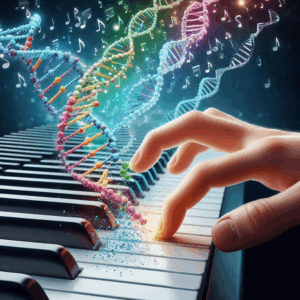
Every art, science, innovation and technology aimed at satisfying a preference or need, or producing something good is linked to the complex interplay and heritable effects of genes and environments.405 Like fingers across a piano’s keyboard creating a melody, this interplay produces life course trajectories with many variations and outcomes.

In a similar way, individual experiences and traits emerge from the unique interplay of genetic propensities and environmental factors. On a broader scale, countries and cultures can have distinct but intertwined themes, harmonies and melodies created by the collective and dynamic gene-environment experiences of their populations.
Now…here we are in the 21st century…our biological and cultural themes, harmonies and melodies in discord.
Who are we and what have we done?
The gene-environment framework of every culture and country in the world is littered with the heritable inequalities of social hierarchy and socioeconomic stratification reproduced through multiple pathways that include the biological embedding of social experience.
The articles currently on this website explain the gene-environment basis of this pattern, laying the foundation for a series of new feature articles showing how increasingly complex global conflicts are accelerating this biologically embedded pattern into a crisis that will threaten the future of our genome and the planet.
Below is a short list of major social, economic, environmental and geopolitical problems that will be discussed in future articles.
In each of these flashpoints, advancing AI technologies, the internet and system-justified harms are playing a critical role, accelerating changes in social, political and economic structures across the world.
–the unbridled concentration of income, wealth and technological power on a global basis
–cultural, racial and ethnocentric hostilities fueled by socioeconomic inequality
–the global impact of increasingly complex climate change inequities on low-income populations
–global conflicts over habitable and agricultural land
–global food production and distribution inequities
–global health, education and longevity disparities
–the Internet’s role in weaponizing data, fueling disinformation warfare and amplifying ethnic, racial, religious and cultural tribalism
–social conflicts over AI’s role in governance, education and resource distribution
–Biotech Elites capturing political systems and economic resources
–political instabilities resulting in the global rise of authoritarian regimes
–political and economic conflicts between nuclear nations
We believe over the next 75 years, if nothing is done to prevent it, the unprecedented convergence of these factors will result in a gene-environment driven global flashpoint where the increasingly complex predatory stresses of social hierarchy and socioeconomic inequality will threaten the future of our genome and the planet’s life support systems.
Something must be done…
The Global Pursuit of Well-Being Across Our Individual, Cultural & DNA Differences
Predatory Well-Being: A Global Problem
Is there anything more dangerous to the future of the planet than a predator with a ‘big brain’ that can make harms look like social and moral goods?
Approximately 300,000 years ago, after millions of years of genetic variation in hominin evolution, a very different kind of predator with a ‘big brain’ appeared–Homo sapiens.241
Through language, cause-effect reasoning, technological innovation and prosocial norms this cognitive super-predator would eventually open a doorway to the first very thin horizon lines of well-being—a long, healthy, happy and purposeful life.
However, the doorway to well-being reveals an evolutionary path strewn with the potholes of natural selection.63,257,299
Natural selection, in favoring heritable variation in cognition, emotion and behavior, created a paradox of the right and the good–what is considered right or good varies across individuals and groups due to differences between individuals in their inherited DNA (genetic propensities) and the interplay of these differences with environmental conditions (e.g., social, political, economic, technological, natural and biophysical).419
Socioeconomic Inequality and Genetic Enhancement
Policies that justify and reinforce socioeconomic inequality create environmental conditions that have genetic effects on both current and future generations.
For example, while the term “genetic enhancement” may typically refer to the use of genetic modification techniques to improve specific characteristics or traits in humans, genetic enhancement can occur without bioengineering interventions.

Heritable Inequality: The Dark Legacy of Social Hierarchy
When the first cities and states began to appear 5000+ years ago, top-down social hierarchy and socioeconomic inequality came too.189,203,395
A growing body of research shows the predatory stresses of social hierarchy and socioeconomic inequality have heritable effects that can accumulate over generations.351
This self-reinforcing pattern of system-justified inequality has been reproduced across generations and populations through the dynamic interplay of genes, environments and epigenetic influences, shaping not only our political and economic institutions but also the future of human and planetary well-being.421,364
We are approaching a global tipping point of genomic and climate sustainability driven by the increasingly complex predatory stresses of our social hierarchies transmitted across ever-growing global populations.
Sharpened Points
The Cognitive Super-Predator in the 21st Century
The hard problem of human individual differences sits like a sphinx guarding the gateway to equality and well-being with a prosocial riddle, a gateway through which each of us must pass…
…each looking for a way out, each in a DNA prison searching for the key…
Are We About to Unleash AI Predators on the World?
Solving the Hard Problem of our Individual Differences:
The Critical Role of AI
Will AI sweep us into an electronic jungle of social hierarchy, economic inequality and predatory well-being from which we will never escape?
Will AI’s ethical codes be shaped by its human source…clever prosocial deceptions that promote power and dominance as the sine qua non of human civilization driven by harms molded into social and moral goods?
Quality Life Years Lost to Meritocracy
Across the world, people have different talents, abilities, life course goals, desires and outcomes, shaped by an interplay between their inherited DNA differences (genetic propensities) and environmental conditions (e.g., social, political, economic, natural and biophysical).83
The result is a competition to create, arrange and select into social environments that best align with one’s genetic-shaped desires and preferences.413
This selection and alignment process is a determinant of life course experiences, outcomes and well-being.
Something Morally Defective...
Health and Longevity in America
Researchers Daniel Oesch and Nathalie Vigna make the following point about a decline in quality life years for the working class in the United States: “The most tangible sign that the quality of life of the working class has declined comes from mortality rates in the United States, showing that the life expectancy of lowly educated middle-aged whites has been falling since 1999.”96
Research Safari
Kallis, G., Kostakis, V., Lange, S., Muraca, B., Paulson, S., & Schmelzer, M. (2025). Post-growth: The science of wellbeing within planetary boundaries. The Lancet Planetary Health, 9(2), e182-e193.
“The central idea of post-growth is to replace the goal of increasing GDP with the goal of improving human wellbeing within planetary boundaries.”
This review article synthesizes research from the emerging field of “post-growth” economics, arguing that high-income nations must shift their primary goal from increasing GDP to improving human well-being within planetary boundaries. The authors present evidence that further economic growth in wealthy countries does not significantly increase well-being (“social limits”) and that “green growth”—or the absolute decoupling of GDP from environmental damage—is unlikely to happen fast enough to prevent ecological breakdown. Key findings from ecological macroeconomic models suggest that economies can remain stable and provide high living standards without growth through specific policy interventions, such as universal basic services, working-time reductions, job guarantees, and measures to reduce inequality. The paper concludes that transitioning to a post-growth system is essential to reconcile human development with environmental sustainability, while acknowledging the need for different developmental pathways for the Global South. Go to the full article…
Darimont, C. T., Cooke, R., Bourbonnais, M. L., Artelle, K. A., Duplisea, D. E., Favaro, B., Fox, C. H., Pauly, D., Salomon, A. K., & Hutchings, J. A. (2023). Humanity’s diverse predatory niche and its ecological consequences. Communications Biology, 6, 609.
“Our comprehensive assessment revealed an unparalleled taxonomic, spatial, and ecological breadth of humanity’s predatory niche. This uniquely large predatory role is up to 300 times taxonomically and 1300 times ecologically larger than those of the non-human predators to which we had comparable data.”
This study quantifies humanity’s global impact as a predator, revealing that humans exploit approximately one-third (~15,000) of all Earth’s vertebrate species—a “predatory niche” up to 300 times larger than that of comparable non-human predators like sharks or wolves. The researchers find that nearly half of these species are targeted for non-food purposes, such as the pet trade and traditional medicine, and that human exploitation currently threatens the survival of almost 40% of the utilized species. A critical finding is that humans prey non-randomly, disproportionately targeting larger-bodied and longer-lived species, which puts a unique and expansive section of the planet’s “ecological trait space” at risk of extinction. The authors conclude that humanity’s outsized and diverse predatory behavior exerts profound evolutionary and ecological pressures that could severely destabilize global ecosystem functions. Go to the full article…
Excerpt from “The Second Coming” by William Butler Yeats
Source: Poetry Foundation
Social Hierarchies Justify Exclusionary Well-Being
In a social hierarchy, individuals with high socioeconomic status (SES) acquire and sustain their income, wealth, status and power by extracting resources and quality life years from low SES others, which includes members of the middle class.
There is something morally defective about a society’s norms and institutions when a person's inherited DNA differences are a determinant of socioeconomic status and life course well-being—quality life years lost or gained.
Across the world, differences between individuals and groups over what is right and good drives predatory social conflicts over resources and well-being.
However, these differences have biological roots, making them dependent on a signpost hidden in the gene-environment jungle of our individual differences—
Well-Being Across Individual, Cultural and DNA Differences
What We Stand For
Well-Being Across Individual, Cultural and DNA Differences
Stop the Intergenerational Transmission of Social Hierarchy and Socioeconomic Inequality…
We Support the Following:
Policies Focusing on Quality Life Years Gained…
Universal Health Care
Wage Subsidies
Minimum Basic Income
Rent and Price Control Policies
Supply Chain Transparency in Food & Over the Counter Drugs
The Paris Accord
UN Sustainable Development Goals
Smart Machine Technologies (AI) as a Global Public Good
Public Banking Concepts…as described by Angus Deaton
Global Wealth Tax
Public Ownership of Natural Resources
Anti-Death Penalty
Public Ownership of Energy Supply
A Global Consortium to Establish Policies Regarding Private and Public Rights
Regulation of Ownership and use of Space and Planetary Bodies
All for-profit corporations should develop social enterprise projects designed to reduce the political and economic effects of hierarchy– socio-economic inequality and inequities in health, happiness and longevity.
In addition, we endorse an editorial in Nature March 2022 on climate change.
“Although there’s now a consensus that human activities have irreversible environmental effects, researchers disagree on the solutions — especially if that involves curbing economic growth. That disagreement is impeding action. It’s time for researchers to end their debate. The world needs them to focus on the greater goals of stopping catastrophic environmental destruction and improving well-being.” The editorial concludes “…the world is running out of time.”
All articles and related material appearing throughout this website were developed and written by WGW.
QualityLifeJungle.net is not a 501(c)(3) entity.
A Global Public Good
Well-Being Across Individual, Cultural and DNA Differences
A Quality Life
R(evolution)
The political and socioeconomic stability of every country in the world today is cross-linked in a globalization process driven by a genetic competition across cultures and societies to create, modify and control the norms and institutions that regulate their social environments.
Here we are in the 21st century, cognitive predators trapped in our social hierarchies, devouring resources in a gluttonous state of status consumption destroying the ecosystem that sustains us.
Opt-in to our emails
Receive an email notification when new material has been added to the website.
We do not collect personal information or make money from cookies, but opting-in to receive emails from QualityLifeJungle.net helps us determine our readership and make better decisions regarding future articles and other material.
We only use your email to communicate with you.
How else can you help?
Attributions:
Map photo courtesy of Hans Isaacson on Unsplash.com
DNA photo courtesy of Warren Umoh on Unsplash.com
Pencils photo courtesy of Kelli Tungay on Unsplash.com
Diverse Group photo courtesy of Fauxels on Unsplash.com
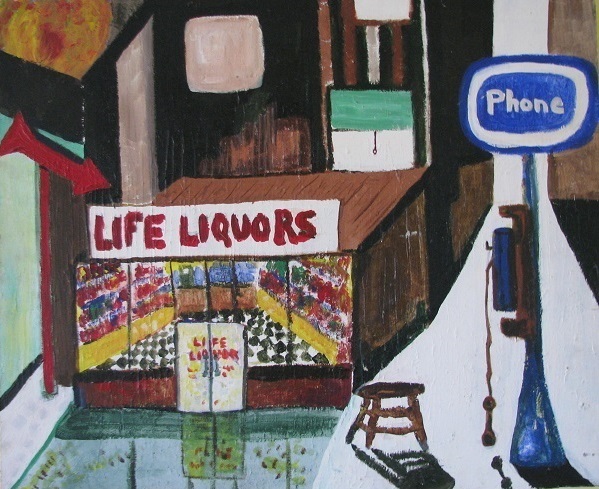
Original paintings copyrighted by Bonheur, LLC
Other images shown in the header, with the articles and elsewhere on this website are copyrighted by Bonheur, LLC.